Tech News This Week #23 | NF World Latest News
Tech News – Drone Organ Transportation | Chandrayaan-3 | Equivalence Principle | AI Programme | Tesla & BYD
Check out the Top 5 Interesting Tech News this Week below in the NF World Latest News Section. In this section, you can read the weekly summary of Gadgets, Space and Science-related Tech News.
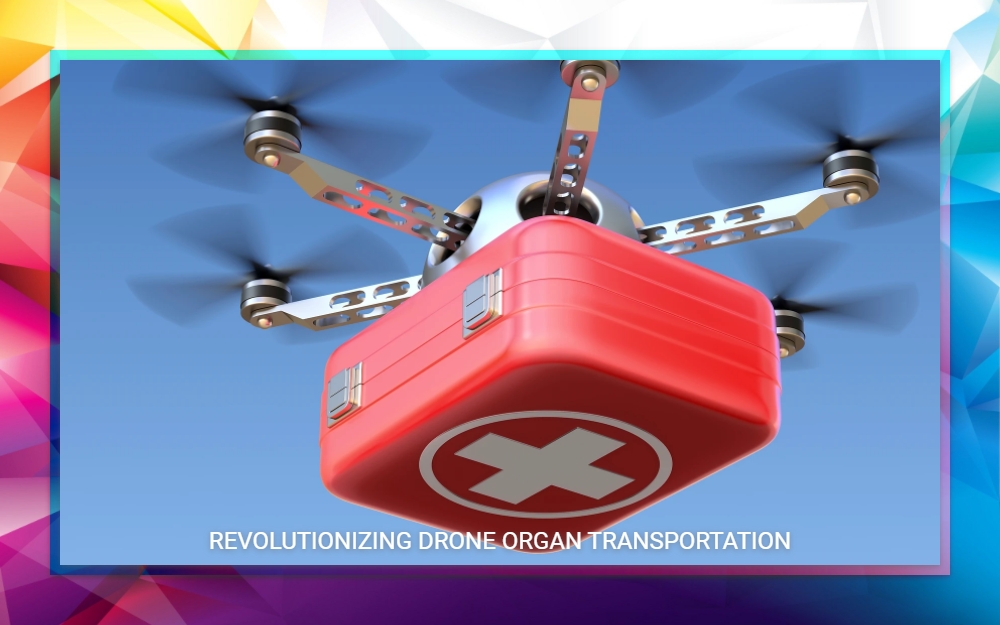
Revolutionizing Drone Organ Transportation
Experiment and Consortium’s Goal
A recent experiment conducted in Texas and Oklahoma showcased the potential of utilizing drones for organ transportation, significantly reducing travel time. The experiment aligns with the consortium’s objective of utilizing this technology to save more lives in the near future. The drone used in the experiment is an optionally piloted aircraft, specifically a light, single-engine piston Cessna. Currently in the experimental phase, this unmanned vehicle aims to transport up to 400 lbs of freight, including donated organs.

Successful Test Flights
During the test flights, the drone carried a kidney, liver, pancreas, blood, and tissue. In the first leg, it travelled 350 miles from Texas Tech University’s Reese Technology Center in Lubbock to Oklahoma City. The subsequent leg covered 471 miles to the San Antonio International Airport before returning to the Reese Technology Center. Notably, the entire flight was operated using robotic technology, marking a groundbreaking achievement in organ transportation.
Benefits of Drone Technology
The experiment sought to determine whether drones could provide a faster and more efficient means of transporting donated organs, crucial for timely delivery to patients in need. The test results were promising, as the drone completed the journey in 12 hours and 15 minutes, significantly shorter than the over 20-hour travel time by car or truck. Upon arrival in Oklahoma City, San Antonio, and Lubbock, the organs were examined and found suitable for transplantation. However, they were subsequently donated for clinical research purposes instead.
Collaboration and Future Prospects
The Matador Consortium, which sponsored the experiment, partnered with the Texas Organ Sharing Alliance, LifeShare of Oklahoma City, and LifeGift of Houston to accelerate research and development for commercial uncrewed aerial system (UAS) operations. The consortium’s vision extends beyond organ transportation and includes various applications such as search and rescue services, crop management, rural healthcare, renewable energy infrastructure, and herd management. Once approved by the Federal Aviation Administration (FAA), aerial organ transportation via drones will be implemented in rural areas of South Texas, including Edinburg, McAllen, and Brownsville.
Conclusion
The successful drone experiment in Texas and Oklahoma has opened new possibilities for revolutionizing organ transportation, paving the way for faster and more efficient deliveries. With further research and development, this technology has the potential to save countless lives by ensuring timely organ transplantation. The collaboration between the Matador Consortium and various organizations signifies a collective effort towards advancing uncrewed aerial system operations for a range of critical applications beyond organ transportation.
Check out our website New Facts World and follow us on Instagram for more exciting tech news.

India’s Historic Lunar Exploration Mission: Chandrayaan-3

Equivalence Principle: Consistency Between Mass Properties

Tesla and BYD’s Expansion into the Indian Market